 What is AmnioRederm
AmnioRederm is a placental membrane biological wound dressing designed to naturally stimulate the recovery of non-healing soft tissue wounds from as early as 1 month1.
AmnioRederm as an Advanced Wound Therapy in non-healing or hard-to heal wounds:2
As a specialised adjunctive therapy, AmnioRederm is designed to naturally stimulate the recovery of non-healing soft tissue wounds. It is made from human placental membrane, consisting of the amnion and chorion, which is a collagen rich structure. The placental membrane is mechanically separated from the placenta under aseptic conditions, before being enzymatically treated to remove epithelial cells from the membrane surface, therefore no living cells are exposed to the patient. Further to this, the structure of the placental membrane itself acts as a natural cellular scaffold, allowing for cellular adhesion and mobility.
Dehydrated placental membrane provides natural healing properties to wounds with minimal inflammation and scarring.
Benefits of AmnioRederm Include:
- Promotes epithelialisation3 (Provides a structure for cellular migration and proliferation)
- Reduces time to healing3
- Helps in pain reduction at affected site3
- Reduces overall treatment costs at the affected site4
- Contains collagen types IV, V and VII which promote cellular differentiation and adhesion
- Anti-inflammatory effect
- Bacteriostatic effect
- Anti-adhesive and supportive in preventing scarring
- Assists with pain and discomfort at affected site
- Known to be non-immunogenic and low in antigenicity
| Indications | Contraindications |
|---|---|
|
AmnioRederm should NOT be implanted onto:
|
| This product is intended for single patient use. | |
Application
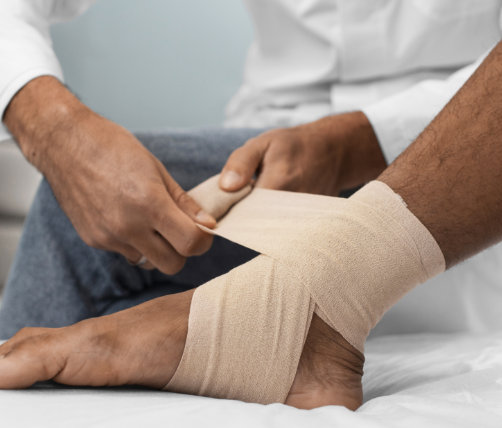
AmnioRederm is intended to be used as an adjunctive to the normal standard of care for small to medium wound healing applications. It is specifically designed to enhance the recovery of soft tissue wounds, especially chronic non-healing wounds such as diabetic ulcers and lesions. AmnioRederm is a thin membrane applied directly to the wound.
Prior to using AmnioRederm, a thorough initial assessment of the wound is necessary, as is a medical history. These are the same steps that you would follow prior to implementing any wound treatment and are not specific to amniotic membrane treatment:
- Gather information on the history of the wound, including duration, what treatments have been tried and patient comorbidity.
- Document wound appearance, size, depth, presence of necrotic tissue.
- Note whether bone or other structures are visible.
- Assess circulatory status, nutrition, and other barriers to healing. Prepare the wound bed by performing any necessary debridement.
- The wound bed should be clear of any necrotic tissue and should not have any signs of infection.
- Remove the membrane from the polyester net and place it on the wound. The membrane should cover the edges of the wound. If necessary, use two or three membranes to cover wound area to the edges.
- Remove the membrane from the polyester net and place it on the wound. The membrane should cover the edges of the wound. If necessary, use two or three membranes to cover wound area to the edges.
- Reassess after 7 days.

Collection
Placental donations are collected during the birthing process in accordance with the National Health Act of South Africa. All donors complete a health questionnaire and are screened for transmissible diseases. All AmnioRederm samples are tested during processing for bacterial and fungal contamination and to ensure sterility of the product.
Packaging
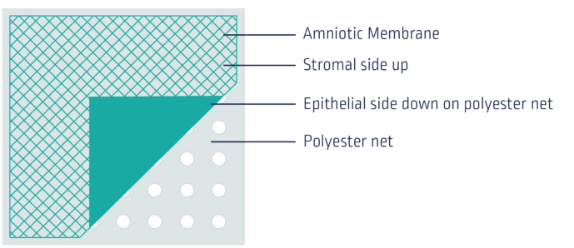
The amniotic membrane is spread on a polyester net with the epithelial side orientated onto the net. The membrane is dehydrated, cut to size and packaged aseptically in an inner polyethylene pouch and sealed with an outer peel pouch. Dehydrated denuded human amniotic membrane is terminally sterilised by gamma-irradiation.
Storage
AmnioRederm can be stored in a clean dry setting at room temperature for up to 4 years from date of manufacture. No special storage is needed for this product.
Available Sizes
AmnioRederm is dispatched in an unopened, original packaging.
It should be stored at room temperature (10-28°C).
Use within 4 years from the day of production (expiry date will be
printed on each AmnioRederm product label).
Available sizes:
DHAM2030 - 20x30mm
DHAM4060 - 40x60mm
References
- GC Boersema, H Smart, M Giaquinto-Cilliers, M Mulder, GR Weir, FA Bruwer, PJ Idensohn, JE Sander, A Stavast, M Swart, S Thiart, Z Van Der Merwe. Management of non-healable and maintenance wounds: a systematic integrative review and referral pathway. Wound Healing Southern Africa: 2021 Volume 14, No 1 p8-16.
- Data from AmnioRederm package insert
- Zelen, C. M., Serena, T. E., Denoziere, G., & Fetterolf, D. E. (2013a). A prospective randomised comparative parallel study of amniotic membrane wound graft in the management of diabetic foot ulcers. International Wound Journal, 10(5), 502 507. https://doi.org/10.1111/iwj.12097.
- Zelen, C. M., Serena, T. E., Gould, L., Le, L., Carter, M. J., Keller, J., & Li, W. W. (2015). Treatment of chronic diabetic lower extremity ulcers with advanced therapies: a prospective, randomised, controlled, multi-centre comparative study examining clinical efficacy and cost. International Wound Journal, 13(2), 272–282. https://doi.org/10.1111/iwj.12566